
Leak Detection & Repairs
Finding where the water's actually going before anything gets repaired.
Not every leak is the same, so the approach depends on where it's coming from. Leaks in the pool's plumbing are handled with a specialist brought in for that specific work, while equipment, structural, and other leaks are diagnosed and repaired directly.
How a Leak Is Found
The process usually starts with the pump switched off, watching whether the water level drops. If it does, that points toward the shell, plumbing, or fittings rather than the equipment. From there the pump goes back on, and the water level is watched again to see where it stops dropping, which helps narrow down whether the leak is on the suction side or somewhere further through the system.
Dye testing is used to check whether specific fittings are actually leaking. A small amount of dye released near a fitting underwater will get drawn into a genuine leak, showing up exactly where water is escaping rather than guessing.
The Most Common Leak We Find
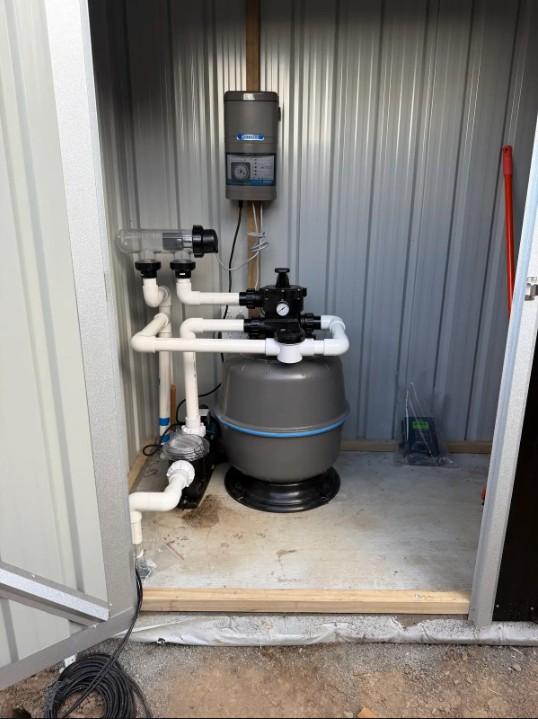
By far the most common leak is a multiport valve leaking to waste, usually caused by a worn spider gasket inside the valve. This lets water escape out through the waste port even when the valve is set to filter, quietly losing water without anything looking obviously wrong on the surface.
This can often be fixed by adding a valve on the waste line itself, a straightforward fix once the cause has been confirmed, rather than needing to replace the whole multiport valve.
Is It a Leak or Just Evaporation?
Evaporation normally accounts for a small, consistent daily drop in water level, more in hot or windy weather. If a pool is losing noticeably more than that, especially overnight with the pump switched off, it's worth treating as a genuine leak rather than assuming it will sort itself out.
Where Leaks Typically Show Up
Beyond a multiport valve leaking to waste, the other places leaks commonly turn up are around fittings such as skimmers, returns, and lights, where the seal between the fitting and the pool shell can work loose over time, and in the underground plumbing runs connecting the pool to the equipment pad. Concrete pools can also develop structural cracks in the shell itself, usually from ground movement or age rather than anything sudden.
Getting a leak sorted sooner rather than later is worth it beyond just the water bill. Water escaping steadily can soften and erode the ground around the pool shell, footings, or paving over time, and a small, cheap fix now is generally far less disruptive than the excavation or structural work that a long-ignored leak can eventually lead to.
Signs Worth Getting Checked
Worth getting checked if you notice
- ✓Water loss beyond what evaporation alone would explain
- ✓Wet patches or damp ground around the pad or equipment
- ✓The pump losing prime repeatedly for no obvious reason
Photo: dye testing a fitting for a leak
Photo: a completed leak repair
Frequently Asked Questions
How do you find a pool leak?
Usually starts with the pump switched off to see if the water level drops, pointing toward the shell, plumbing, or fittings. Then the pump goes back on and the level is watched again to see where it stops dropping, narrowing down whether it's on the suction side or further through the system. Dye testing checks whether specific fittings are actually leaking.
What's the most common pool leak?
A multiport valve leaking to waste, usually from a worn spider gasket, letting water escape through the waste port even when the valve is set to filter.
How do I know if it's a leak or just evaporation?
Evaporation normally accounts for a small, consistent daily drop in water level, more in hot or windy weather. Losing noticeably more, especially overnight with the pump off, is worth treating as a genuine leak.
Can a leaking multiport valve be fixed without replacing it?
Often, yes, by adding a valve on the waste line itself rather than replacing the whole multiport valve.
Why does it matter if I fix a pool leak quickly?
Water escaping steadily can erode the ground around the shell, footings, or paving over time, and a small, cheap fix now is generally far less disruptive than the excavation or structural work a long-ignored leak can lead to.
Related Services
Losing More Water Than Usual?
Get in touch with what you're seeing and we'll work through where it's likely coming from before booking anything in.
Get a Leak Repair QuoteLooking for something else? See all repairs & installs.