
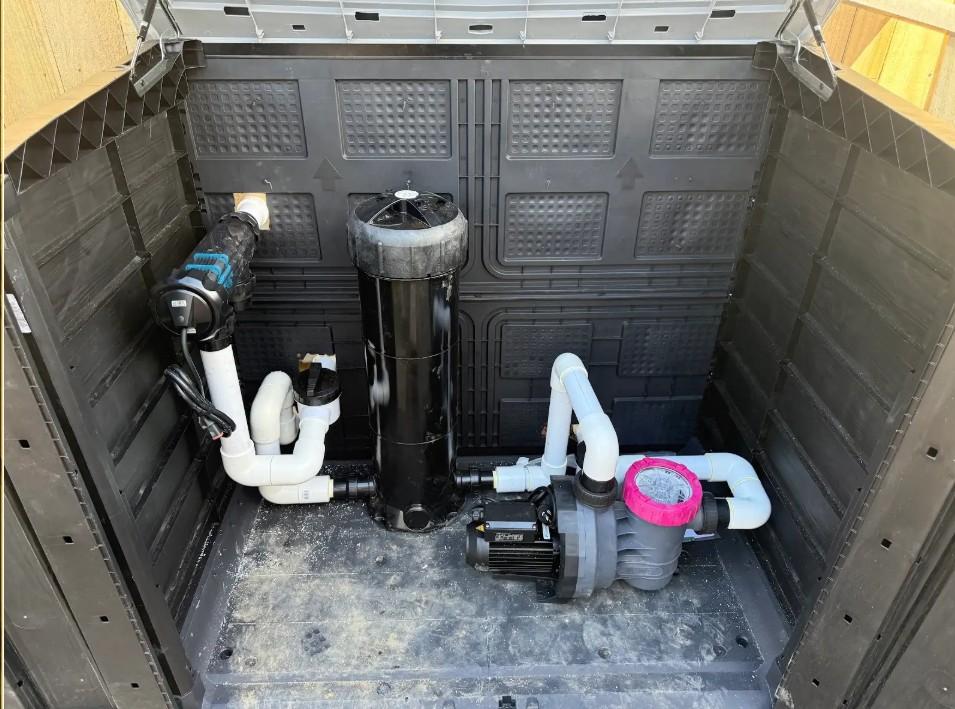
Pump Repairs & Installs
From a pump making the wrong noise to one that's stopped altogether, diagnosed properly across all major brands.
From a pump making the wrong noise to one that's stopped altogether, the process starts with an actual diagnosis across all pump brands, through to full replacement if it's beyond repair.
The Most Common Faults
Two faults come up more than anything else: the capacitor or the bearings. A capacitor fault usually shows up as a pump that hums but won't start, or one that needs a manual push to get going. Worn bearings tend to announce themselves with noise, a grinding or screeching sound that gets worse over time.
Sometimes a repair is the right call, and sometimes replacing the pump makes more sense, depending on the pump's age, how it was diagnosed, and what a repair versus a new unit actually costs. That's worked through as part of the quote rather than assumed either way.
Single Speed vs Variable Speed Pumps
Both single speed and variable speed pumps are installed, and each has genuine pros and cons rather than one being universally better. A single speed pump runs at one fixed speed, is simpler mechanically, and costs less upfront, which makes it a reasonable choice for a straightforward replacement or a smaller pool.
A variable speed pump can run at different speeds depending on what's needed, drawing far less power when running slowly for routine filtration and only ramping up for jobs like vacuuming that need more flow. That flexibility generally means lower running costs over time and quieter operation, since a variable speed pump doesn't need to run at full speed to keep a pool filtered. The trade-off is a higher purchase price, so whether it pays for itself depends on how long the pool's been running and how the numbers stack up for that property.
A Homeowner Tip in the Meantime
Keep an eye on your pool's water level and make sure the pump always has water to draw on. Running a pump dry is one of the fastest ways to damage it, and it's an easy thing to prevent while waiting for a repair visit.
The noise a pump makes is often a decent clue before anyone even arrives. A grinding or screeching sound points toward worn bearings, a loud hum with no water moving usually means a blockage or an impeller problem, and a pump that keeps tripping the breaker is more often a motor or wiring fault than anything mechanical. None of that replaces an actual look at the pump, but it's worth mentioning what's going on when booking a repair.
Signs Your Pump Needs Attention
Worth getting checked if you notice
- ✓Grinding, screeching, or a noise that's new and getting worse
- ✓Reduced water flow or visible air in the system
- ✓The pump tripping the breaker or not starting at all
Photo: a newly installed pool pump
Photo: a pump repair completed on site
Frequently Asked Questions
What are the most common pool pump faults?
The capacitor or the bearings. A capacitor fault usually shows up as a pump that hums but won't start, or one that needs a manual push to get going. Worn bearings tend to announce themselves with noise, a grinding or screeching sound that gets worse over time.
Should I repair or replace my pool pump?
Depends on the pump's age, how it was diagnosed, and what a repair versus a new unit actually costs, worked through as part of the quote rather than assumed either way.
Single speed or variable speed pump, which is better?
Both have genuine pros and cons. A single speed pump is simpler mechanically and costs less upfront. A variable speed pump draws far less power running slowly for routine filtration and only ramps up when needed, generally lower running costs and quieter, but at a higher purchase price.
Why does my pump keep tripping the breaker?
More often a motor or wiring fault than anything mechanical.
Can running a pump dry damage it?
Yes, it's one of the fastest ways to damage a pump, so it's worth keeping an eye on the water level so the pump always has water to draw on.
Why is my pump losing prime or not drawing water?
Common causes are a low water level, an air leak on the suction side, a clogged skimmer or pump basket, or a check valve issue if the pump sits above the water line.
How long should I run my pool pump each day?
As a general guide, around 6 hours a day in winter and 8 hours in summer, though it depends on the pool's size, the pump, and how much the pool is being used.
Related Services
Pump Playing Up?
Get in touch with what you're noticing, including any noise or timing details, and we'll get a proper diagnosis booked in.
Get a Pump Repair QuoteLooking for something else? See all repairs & installs.