Pool Repairs & Installs
From a failed pump to a full salt chlorinator conversion — equipment repairs and installs across Auckland, done properly and explained honestly.
Pool maintenance keeps a pool clean; repairs and installs are what keep the equipment behind it actually working. This covers the full range — diagnosing a fault, replacing a failed part, or installing new equipment — across all major brands, not just whatever's easiest to source. Every job gets a proper assessment first and an honest explanation of what it needs, the same standard applied to every visit.
Swipe left/right, or use the buttons above
Featured
Plumbing
Pool plumbing — the piping that moves water between the pool, pump, filter, and chlorinator — is handled directly, covering everything from a single fitting to a full re-pipe. This doesn't extend to solar heating pipework, which is a separate system.
Worth knowing: no plumbing license is required in New Zealand for pool circulation plumbing, since it isn't connected to the mains water supply. That surprises some homeowners, but it's accurate — and it's why a pool specialist handling this work directly, rather than subcontracting a licensed plumber, is entirely normal and above board.
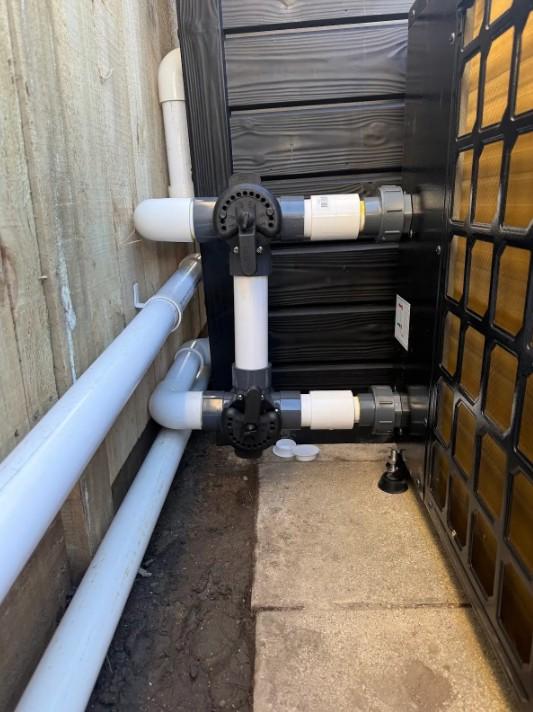
A heat pump bypass valve — one example of the pipework fitted as part of a plumbing job.
Featured
Pump Shed Installs
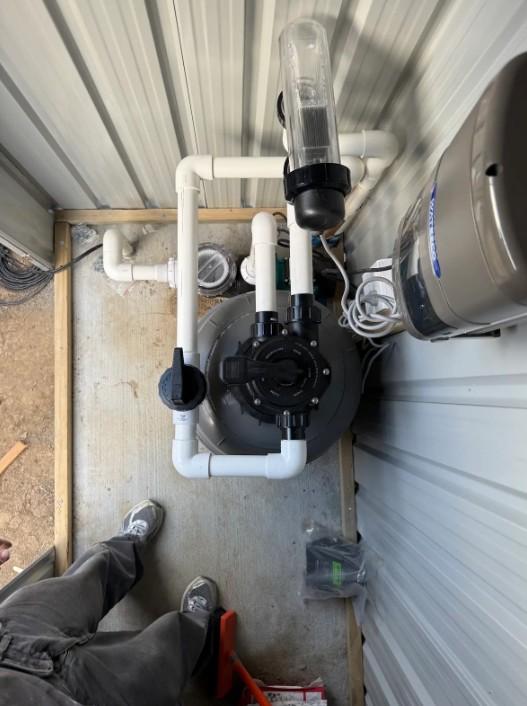
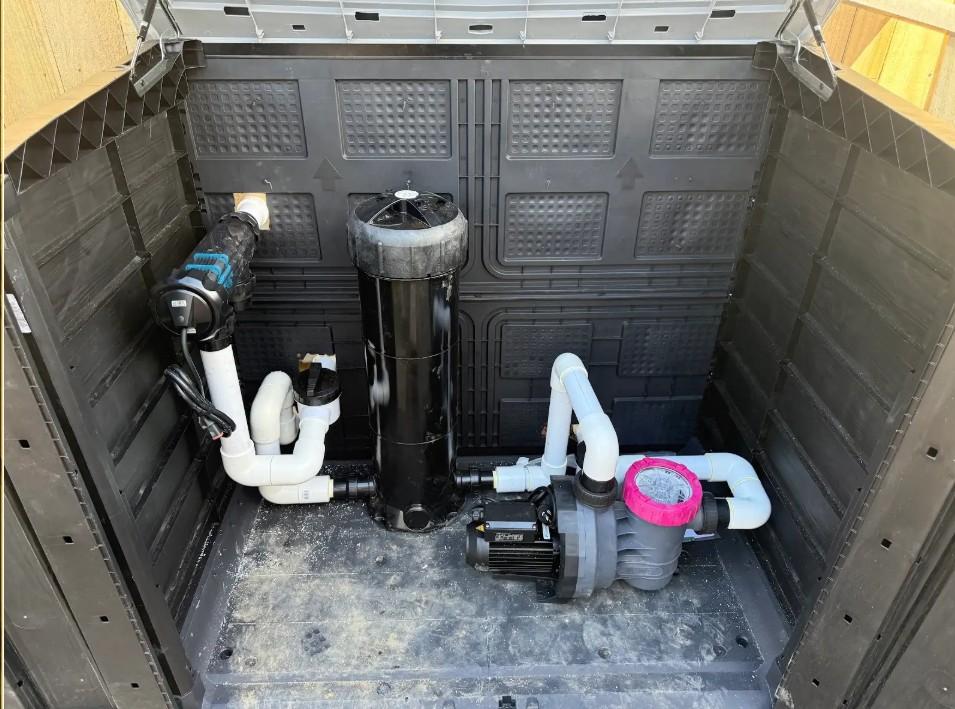
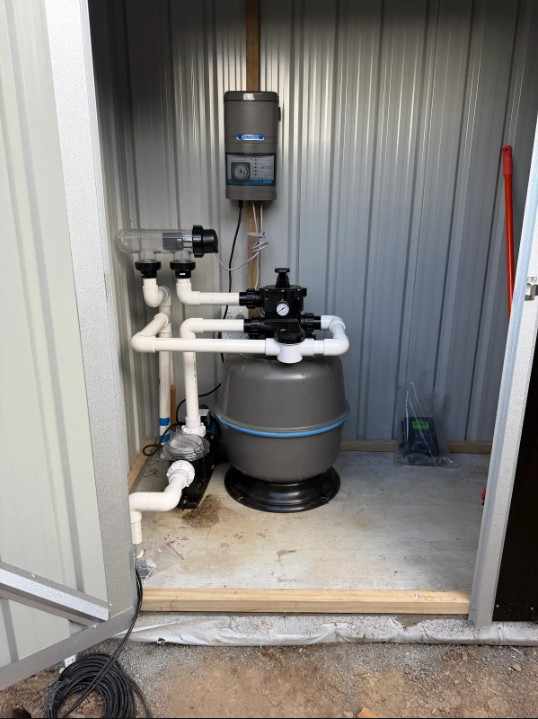
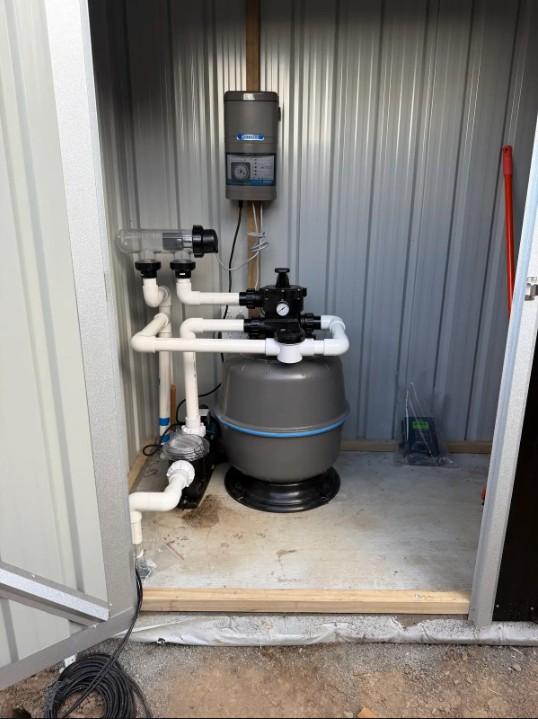
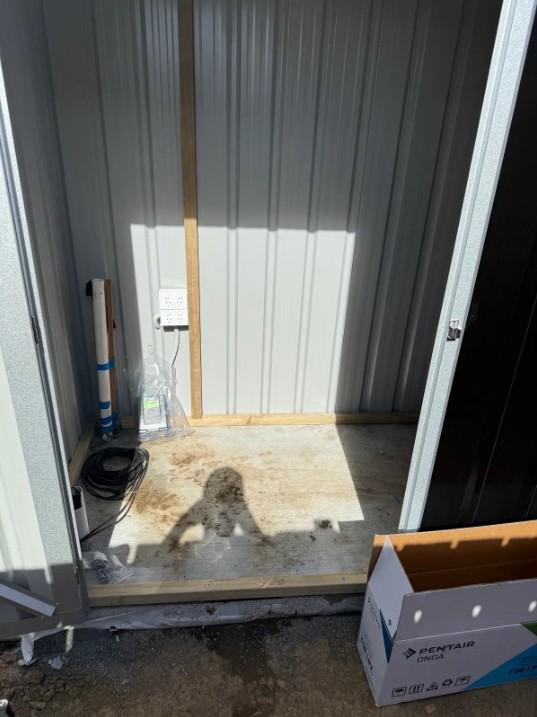
Pool equipment left exposed to the weather doesn't last as long as it should. Pump shed installs cover both new builds and relocating existing pump, filter, and chlorinator equipment into a shed for the first time — using a pre-made shed where that fits the job, or building one on-site where it doesn't.
Request a Quote →
Everything Else We Cover
Salt Chlorinator Installs
Whether it's converting a pool from manual chlorine dosing to a salt system for the first time, or replacing a chlorinator that's reached the end of its life, installs are done to work properly with your pool's existing plumbing and equipment. Work covers all chlorinator brands, so the choice comes down to what suits your pool, not what's easiest to fit.
A conversion means plumbing the salt cell into the return line, fitting and configuring the control unit, then getting the water's salt level balanced so the system actually works as intended from day one — not just installed and left to sort itself out. A straight replacement is simpler: matching the new unit to the pool's chlorine demand rather than just swapping in whatever's on the shelf.
Signs to watch for
- ✓Chlorine levels drifting even though the settings haven't changed
- ✓An error code or warning light on the control unit
- ✓The cell visibly worn or scaled up when checked
Media Changes
Filter media breaks down and stops filtering properly well before most people notice. Both sand and glass media are available — glass is the personal recommendation, since as a rule of thumb it lasts 5+ years compared to around 3 for sand, and filters more finely along the way.
The difference shows up over time rather than immediately: sand grains gradually round off and channel water through gaps instead of filtering it, while glass holds its shape and filtering performance for longer. Both do the job when fresh — the recommendation is about what still works properly three or four years in.
Signs to watch for
- ✓Water that stays slightly cloudy even though chemistry tests fine
- ✓Filter pressure climbing faster than it used to between cleans
- ✓Sand or media escaping back into the pool through the returns
Filter Changes
Cartridge, sand, and DE (diatomaceous earth) filters are all serviced and replaced. Where a full swap makes more sense than a media top-up, sand or glass media filters are recommended over cartridge or DE — they're lower-maintenance and hold up better over time. The filter itself is supplied as part of the job.
Cartridge and DE filters need more hands-on upkeep — cartridges need regular cleaning and eventually stop rinsing back to clean, and DE needs its powder recharged after every backwash. A sand or glass media filter is closer to set-and-forget by comparison, which is usually what makes the switch worthwhile beyond just replacing what's already there.
Signs to watch for
- ✓A cartridge that won't rinse clean anymore no matter how it's cleaned
- ✓Cracks or wear visible in the filter housing itself
- ✓Persistent leaking around the filter body or fittings
Pump Repairs & Replacement
From a pump making the wrong noise to one that's stopped altogether, the process starts with an actual diagnosis across all pump brands, through to full replacement if it's beyond repair. Homeowner tip in the meantime: keep an eye on your pool's water level and make sure the pump always has water to draw on — running a pump dry is one of the fastest ways to kill it.
The noise itself is usually a decent clue before anyone even arrives: a grinding or screeching sound points toward worn bearings, a loud hum with no water moving usually means a blockage or an impeller problem, and a pump that keeps tripping the breaker is more often a motor or wiring fault than anything mechanical. None of that replaces an actual look at the pump, but it's worth mentioning what's going on when booking a repair.
Signs to watch for
- ✓Grinding, screeching, or a noise that's new and getting worse
- ✓Reduced water flow or visible air in the system
- ✓The pump tripping the breaker or not starting at all
Skimmer Replacements
Skimmer issues range from a cracked lid or worn weir door up to the whole skimmer box needing replacement, and both are covered — full box replacement or individual parts, depending on what's actually failed. Most skimmer problems around Auckland come down to straightforward age and lack of maintenance.
A skimmer that isn't working properly matters more than it looks — surface debris that isn't being pulled in sinks instead, and once it's sitting on the bottom it's both harder to remove and a head start for algae. A cracked lid or a weir door that's stuck or fallen off is often the actual cause of a pool that seems to need brushing more than it should.
Signs to watch for
- ✓A cracked or missing skimmer lid
- ✓The weir door stuck open, stuck shut, or missing
- ✓Visible cracking in the skimmer box itself
Pool Resurfacing
A pool surface that's rough, staining, or visibly deteriorating affects both how the pool feels and how well it holds its water chemistry. Resurfacing work restores the surface properly — get in touch to talk through what your pool's surface actually needs.
A degraded surface isn't just cosmetic — it's more porous, which gives algae more places to take hold and makes the water chemistry harder to keep stable, on top of being rougher and less pleasant underfoot. Getting a proper look at the surface is the only way to know whether it's a genuine resurfacing job or something less involved.
Get a Resurfacing Quote →Leak Repairs
Not every leak is the same, so the approach depends on where it's coming from. Leaks in the pool's plumbing are handled with a specialist brought in for that specific work, while equipment, structural, and other leaks are diagnosed and repaired directly. Either way, the priority is finding where the water's actually going before anything gets repaired.
Evaporation normally accounts for a small, consistent daily drop in water level. If it's losing noticeably more than that — especially overnight with the pump switched off — it's worth treating as a genuine leak rather than assuming it'll sort itself out. On pools with a multi-port valve, a damaged spider gasket is a common, often-overlooked culprit: it lets water escape through the waste port even when the valve's set to filter, and it's usually a cheaper fix than it sounds.
Signs to watch for
- ✓Water loss beyond what evaporation alone would explain
- ✓Wet patches or damp ground around the pad or equipment
- ✓The pump losing prime repeatedly for no obvious reason
Pool Lights
Pool light installs are hardwired — not battery or solar units — for a fixture that's actually reliable long-term. That covers both new installs and replacing existing lights that have failed or need upgrading.
Battery and solar pool lights are convenient to fit but tend to dim, fail, or need attention far sooner than a hardwired fixture does. Hardwiring costs more upfront to install properly, but it's the difference between a light that's still doing its job in years to come and one that's back to being a problem within a season or two — worth factoring in given the fixture sits in water near a home's electrical supply.
Signs to watch for
- ✓Dimming, flickering, or a light that's noticeably weaker than it used to be
- ✓Fogging or moisture visible inside the light housing
- ✓A light that's stopped working altogether
Spa Repairs
Spa pumps, heaters, jets, and controls are all serviced and repaired. If your spa isn't heating, isn't circulating properly, or a component's failed, get in touch to talk through what's going on.
Most spa issues show up as one of a few patterns — jets losing pressure or stopping altogether, a heater that's running but not actually getting the water to temperature, or a control panel throwing an error or just not responding. Whatever the symptom, the same approach applies as everything else here: work out what's actually wrong before anything gets replaced.
Get a Spa Repair Quote →Heat Pump Installs
A heat pump extends the swimmable season by keeping the water warmer for longer than the sun alone manages — genuinely useful either side of peak summer, not just a nice-to-have. The install covers the plumbing and mechanical side: connecting the unit into the pool's existing circulation system, sized and positioned correctly for the pool it's serving.
The electrical side is different from everything else on this page. Pool circulation plumbing doesn't legally require a licensed plumber in New Zealand, but pool electrical wiring does require a licensed electrician — no exception for a specialist doing the rest of the job. That wiring is handled by a licensed electrician as part of the install, not skipped or worked around.
Signs to watch for
- ✓An existing heat pump not reaching or holding its set temperature
- ✓Ice buildup or an unusual noise from the unit
- ✓A swim season that's noticeably shorter than it should be
Not sure what your pool needs?
Send through a few details — or a photo, if it helps — and you'll get an honest read on what's actually going on before anything's booked in.
Request a QuoteLooking for regular pool maintenance instead? See maintenance plans.