
Pump Shed Builds
Keeping pool equipment out of the weather so it lasts as long as it should.
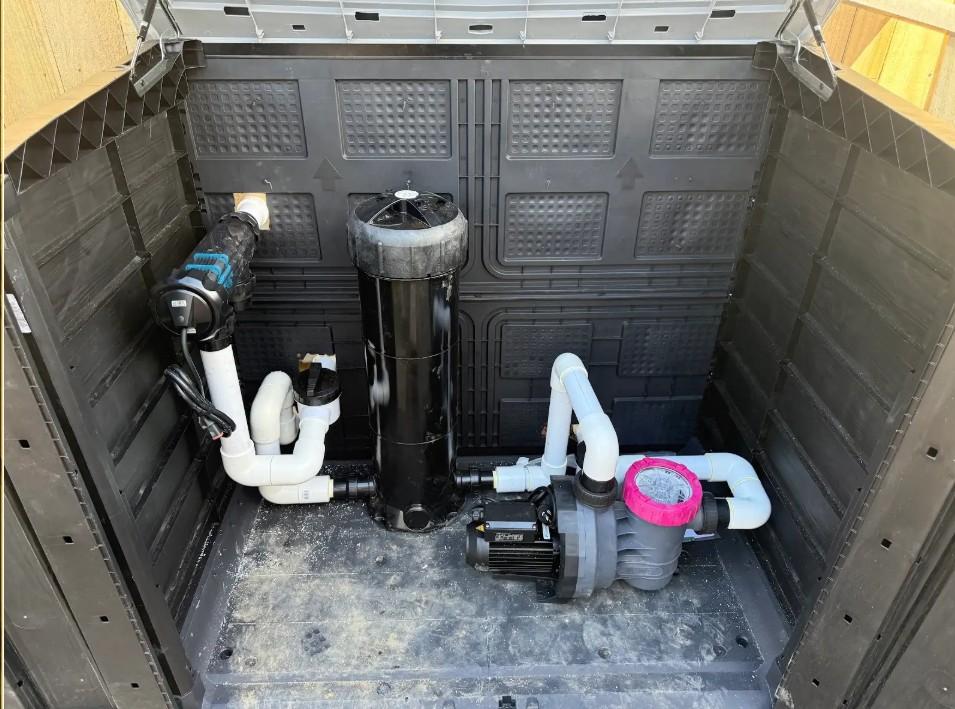
Pool equipment left exposed to the weather doesn't last as long as it should. Pump shed builds cover both new builds and relocating existing pump, filter, and chlorinator equipment into a shed for the first time.
What Kind of Shed
It depends on the setup. A lot of the time PVC pump sheds are used, since they're durable, don't rot or rust, and hold up well to being splashed with pool chemicals. Standard prefabricated sheds and fully custom builds are also done where that's a better fit for the property or the equipment being housed.
Which option makes sense comes down to things like the equipment's footprint, how much airflow it needs, and how the shed needs to fit into the rest of the property. That gets worked through as part of the quote rather than defaulting to one option.
Why It Matters
Pumps, filters, and chlorinators are all built to handle being outdoors to some extent, but direct sun, rain, and general weather exposure still shorten their working life. A shed keeps equipment drier and out of direct sun, which reduces the wear that leads to premature pump and chlorinator failures.
It also tidies up the pool area, keeping noise down and equipment out of sight, which is often as much the reason for the build as the equipment protection itself.
Choosing Materials and Placement
Material choice affects more than looks. PVC and other synthetic sheds resist the moisture and mild chemical exposure that a pool plant room deals with day to day, and they won't rot, rust, or need repainting the way timber and untreated metal eventually do. Timber sheds can be dressed to match the house and landscaping, which is sometimes the deciding factor over PVC's practicality, and a custom build lets both jobs get handled at once.
Ventilation is worth getting right regardless of material. Pumps and chlorinators generate heat during normal operation, and salt chlorinator cells specifically produce a small amount of hydrogen gas as a byproduct of the electrolysis process that turns salt into chlorine. A shed needs enough airflow, usually vents or gaps built into the design rather than a fully sealed box, to let that heat and gas disperse instead of building up inside.
Photo: a completed pump shed build
Photo: equipment relocated into its new shed
Frequently Asked Questions
What material is best for a pool pump shed?
PVC pump sheds are commonly used since they're durable and resist rot, rust, and chemical splashing, though standard prefabricated and fully custom sheds are also built depending on the property and equipment.
Why does pool equipment need a shed?
Direct sun, rain, and general weather exposure shorten the working life of pumps, filters, and chlorinators. A shed keeps equipment drier and out of direct sun, reducing the wear that leads to premature failures.
Does a pump shed need ventilation?
Yes. Pumps and chlorinators generate heat, and salt chlorinator cells specifically produce a small amount of hydrogen gas as a byproduct, so a shed needs enough airflow, usually vents or gaps built into the design, to let heat and gas disperse rather than being fully sealed.
Can existing pool equipment be relocated into a new shed?
Yes, pump shed builds cover both new builds and relocating existing pump, filter, and chlorinator equipment into a shed for the first time.
Equipment Sitting Out in the Weather?
Get in touch and we'll talk through what shed option suits your equipment and your property.
Get a Pump Shed QuoteLooking for something else? See all repairs & installs.