
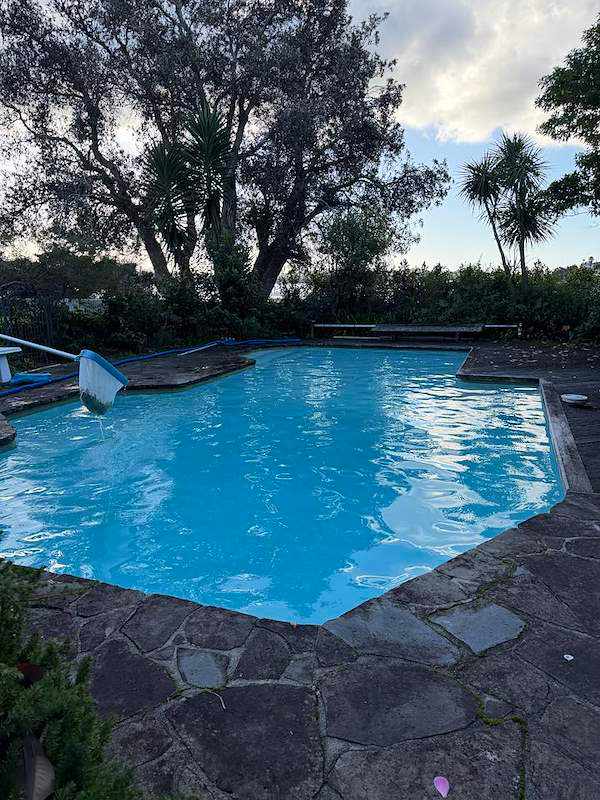
Liner Pool Building
Full vinyl liner pool builds for new pools, and liner replacements for existing ones, across Auckland, done properly and explained honestly.
A vinyl liner pool uses a custom-fabricated liner fitted inside a wall panel or frame structure, rather than a sprayed concrete shell or a pre-moulded fibreglass one. Homeowners choose it for a few consistent reasons: it typically costs less to build than an equivalent concrete pool, the shape and size aren't limited to a mould the way fibreglass is, and if you already have a liner pool, replacing a tired liner is a fraction of the job a full rebuild would be. The shell and structure stay in place, and only the liner (and usually a few fittings) actually needs replacing.
New Liner Pool Builds
A new liner pool build starts with excavation and site prep, then a wall panel or frame structure (steel, polymer, or timber, depending on the pool and the site) is set and braced to the design shape. Once that structure's ready, the custom-fabricated liner is fitted inside it and sealed at every fitting, then the plumbing and equipment (pump, filter, chlorinator) are tied into the shell before fill.
Because the liner is custom-made rather than pulled from a fibreglass mould, the pool's shape, depth, and size aren't limited to a standard range: corners, steps, benches, and irregular block shapes can all be built into the design rather than adapted around what's available off the shelf. That flexibility, combined with a lower material and construction cost than an equivalent concrete build, is why liner pools remain one of the more accessible ways to get a genuinely custom in-ground pool.
Get a Build Quote →Liner Replacements
Re-lining an existing pool means removing the old, worn liner and fitting a new custom-made one to the same shell. The excavation, wall structure, and plumbing already in place stay exactly where they are. It's a fundamentally smaller job than a full rebuild, in both scope and disruption, and it's the standard fix once a liner's reached the end of its working life rather than a sign of anything structurally wrong.
A reline is also the point where it's worth checking the fittings and gaskets that sit under the liner (skimmer, return, and light fittings) since they're exposed during the swap and far cheaper to address then than after the new liner's fitted. The new liner is measured and custom-fabricated to match the pool's existing shape, so the finished pool holds water and looks the way it always has.
Signs to watch for
- ✓Fading or discoloration across the liner
- ✓Wrinkles or looseness in the material
- ✓Visible seams lifting
- ✓Staining that won't come out no matter what's tried
- ✓Brittleness or cracking, especially at the edges
- ✓A slow leak that doesn't match ordinary evaporation
What to Expect
A high-level look at how a new liner pool build actually runs, start to finish.
- 1
Site Assessment
A visit to the property to assess ground conditions, access, and what the site actually allows for shape and placement.
- 2
Design & Quote
Settling on shape, size, and depth, then a full quote before anything's booked in.
- 3
Excavation & Prep
Excavating to the agreed design and preparing a stable base for the wall structure.
- 4
Structure & Liner Install
Wall panels or frame set and braced, then the custom-fabricated liner fitted and sealed.
- 5
Plumbing & Equipment Connection
Pump, filter, and chlorinator plumbed into the shell and tested.
- 6
Fill & Water Balance
The pool filled and the water chemistry tested and balanced before handover, the same standard applied to every visit afterward.
Why Opulent Pools
Liner pool building draws on work that's already done routinely, not a step into unfamiliar territory. Pool plumbing, moving water between the pool, pump, filter, and chlorinator, is handled directly on every repair and install job, the same pipework a liner build needs tied in. Pump, filter, and chlorinator installation and repair, and pool resurfacing, are already part of the regular workload, not new skills picked up for this service.
Opulent Pools is fully insured, and every job is handled directly rather than managed at arm's length, with any electrical work done by a licensed electrician. That's the same standard behind the 500+ pools serviced across Auckland over more than two years in the industry: a direct line to the person actually doing the work, not a call centre or a project manager relaying between you and whoever's on site.
See Resurfacing for more on the surface side of that work, or New Pool Start-Ups & Handovers for what happens once a new build is finished.
Frequently Asked Questions
It depends on the pool's size, the site's access and ground conditions, and how much prep work's needed before excavation can start. Rather than quote a generic timeframe that may not hold for your property, a specific timeline is given as part of the site assessment and quote.
Most vinyl liners last somewhere in the range of 10 to 15 years, though it varies a lot with water balance, sun exposure, and how well the pool's cared for day to day. Fading, wrinkling, or a liner that's gone brittle at the edges are usually signs it's getting close, well before it actually fails.
In-ground pools in New Zealand generally require council building consent, and every pool needs a compliant safety barrier under the Building Act. Consent requirements are talked through as part of the site assessment and quote. Get in touch with your specific property and we'll go through what it needs.
Yes. The new liner is measured and custom-fabricated to the pool's existing shape and dimensions, so the shell, steps, and fittings don't change, only the liner itself.
Generally yes for a new build. A liner pool typically costs less to construct than an equivalent concrete pool, with more shape flexibility than a fibreglass shell. Exact cost depends on the site and design, which is why every build gets a proper quote rather than a ballpark figure up front.
Thinking about a liner pool?
Whether it's a new build or a tired liner on an existing pool, get in touch and we'll talk through what your property and pool actually need before anything's booked in.
Request a QuoteNeed a repair or equipment install instead? See Repairs & Installs. Just had a new pool built? See New Pool Start-Ups & Handovers.